
March
ROH General Meeting with
Rev. Todd Linn
March
4, 2008
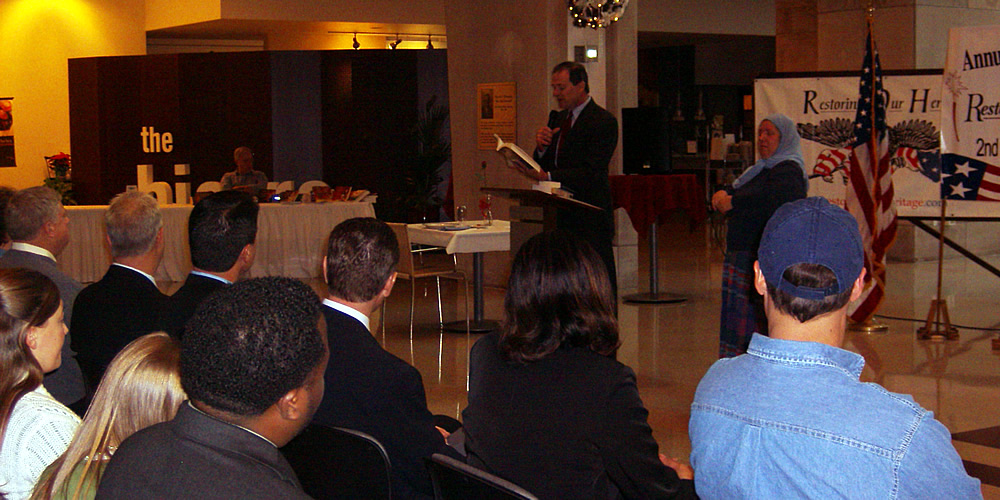
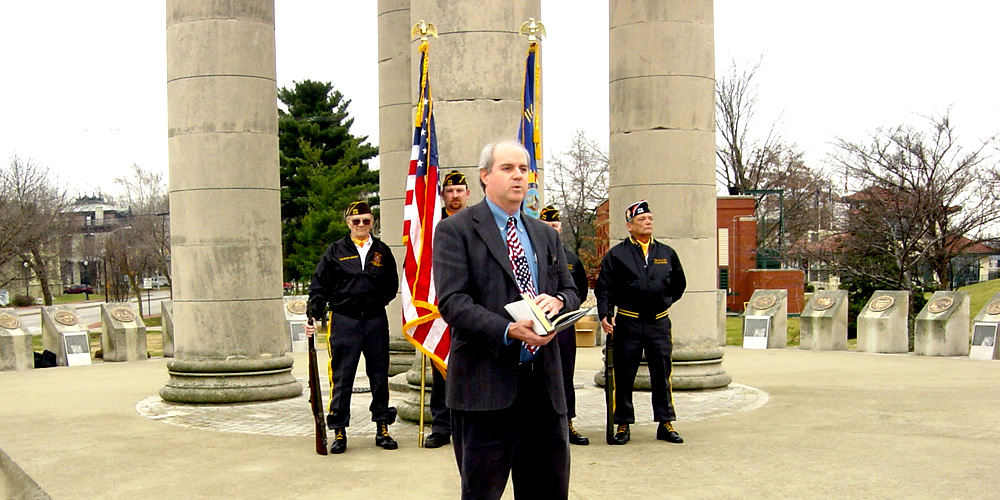
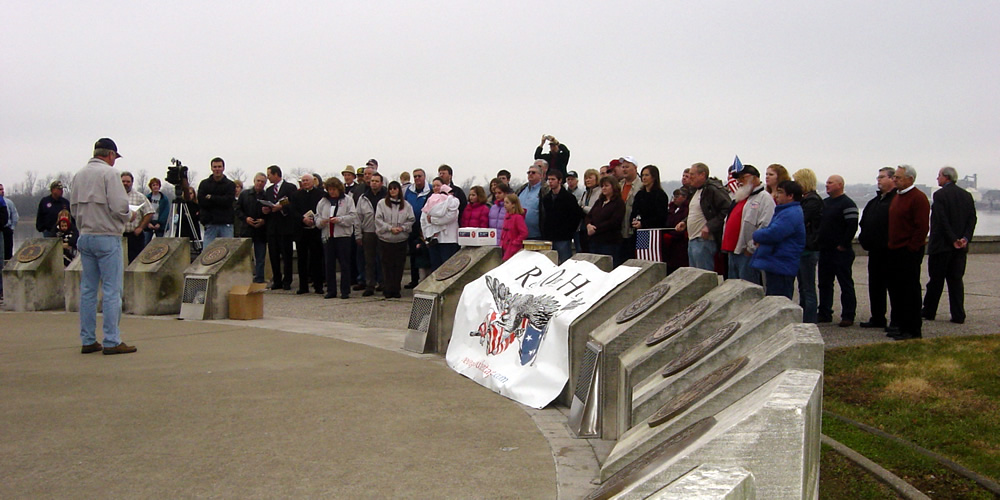
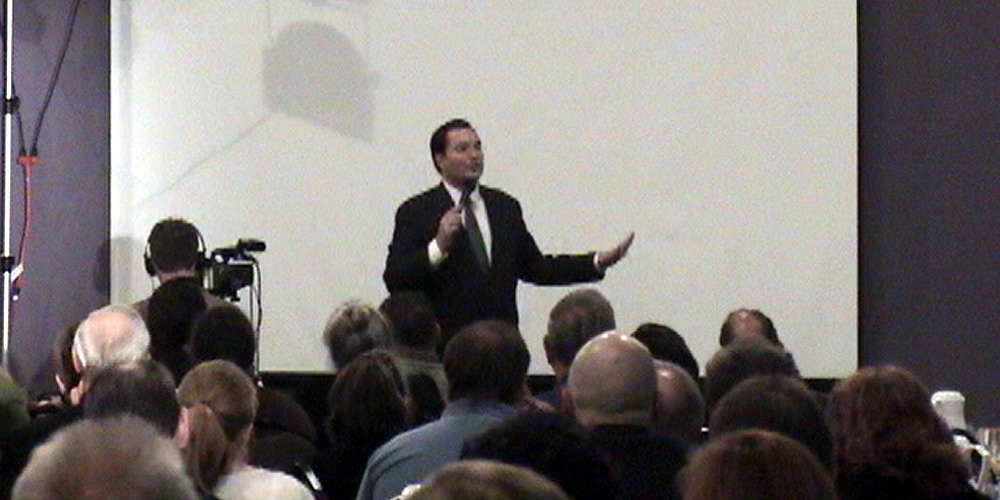
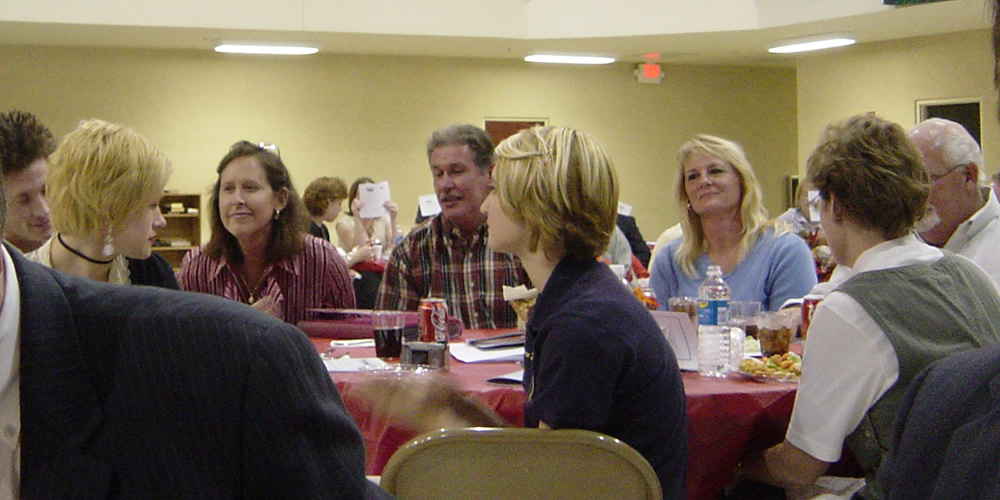
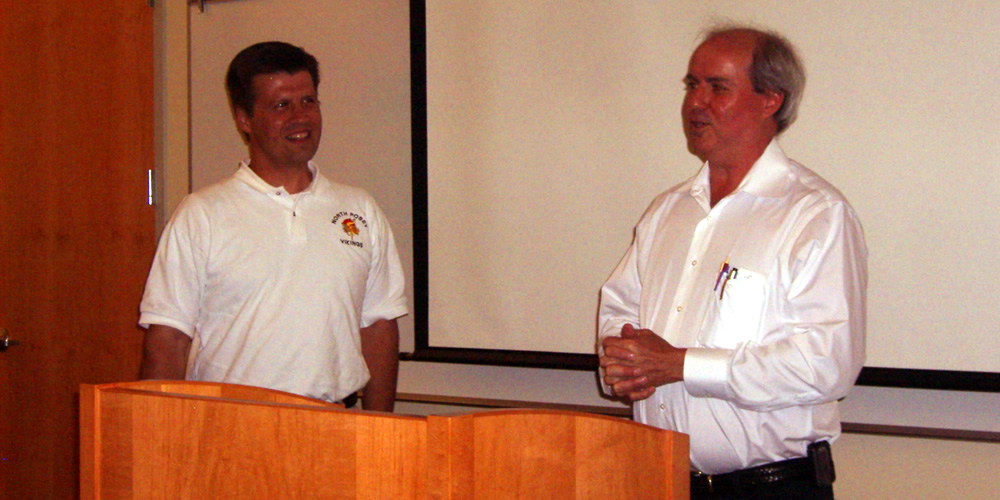
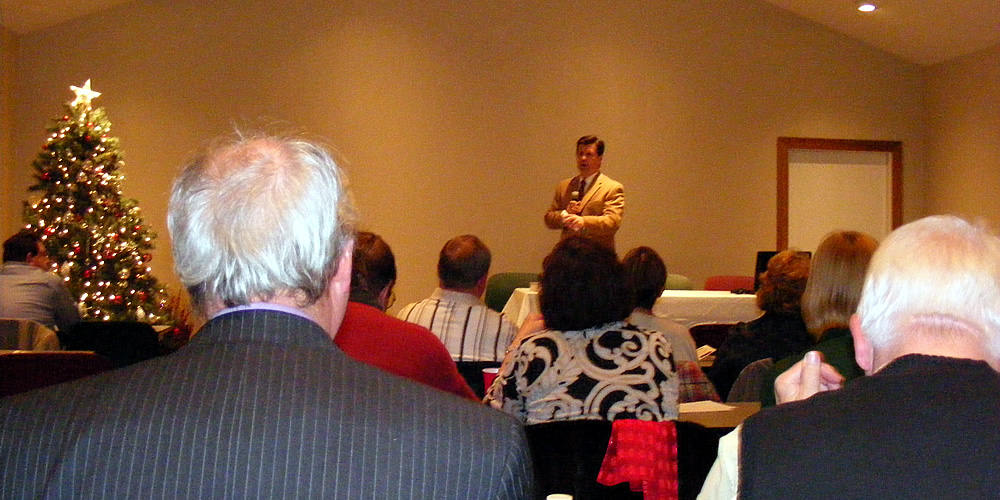
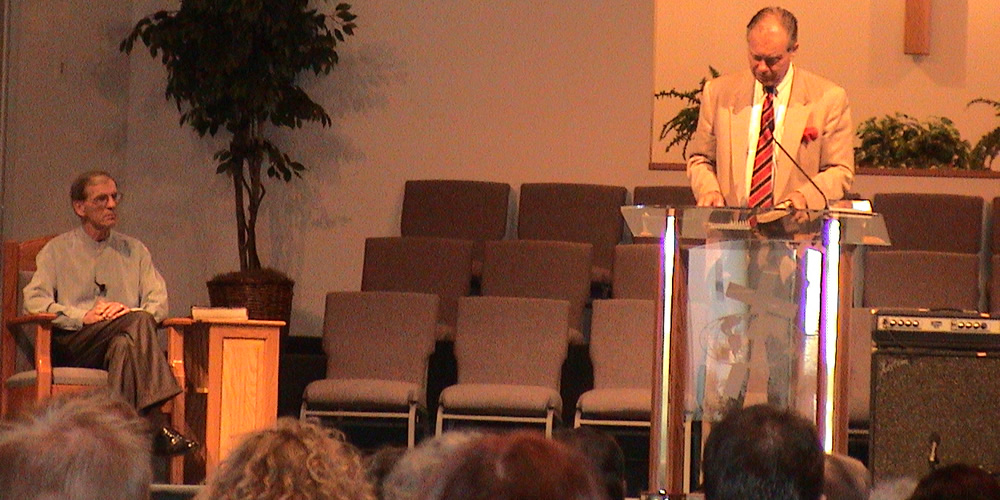
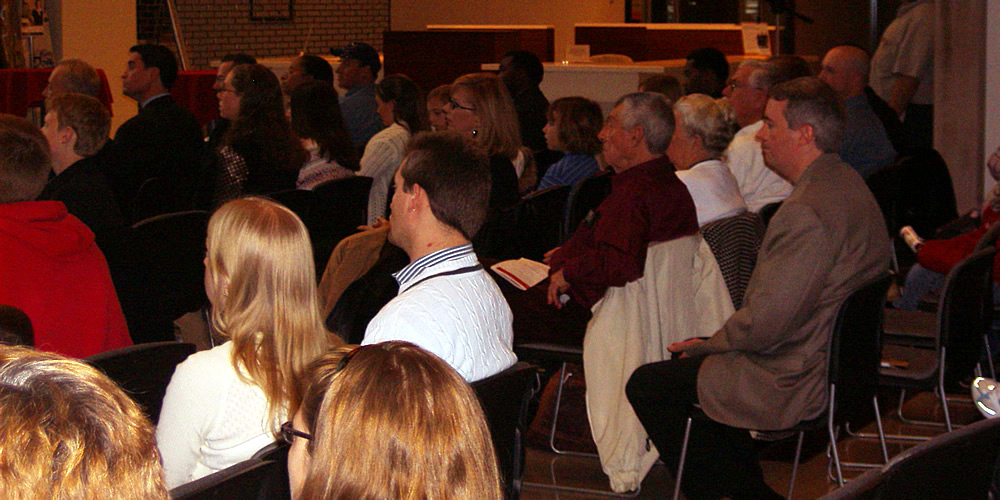
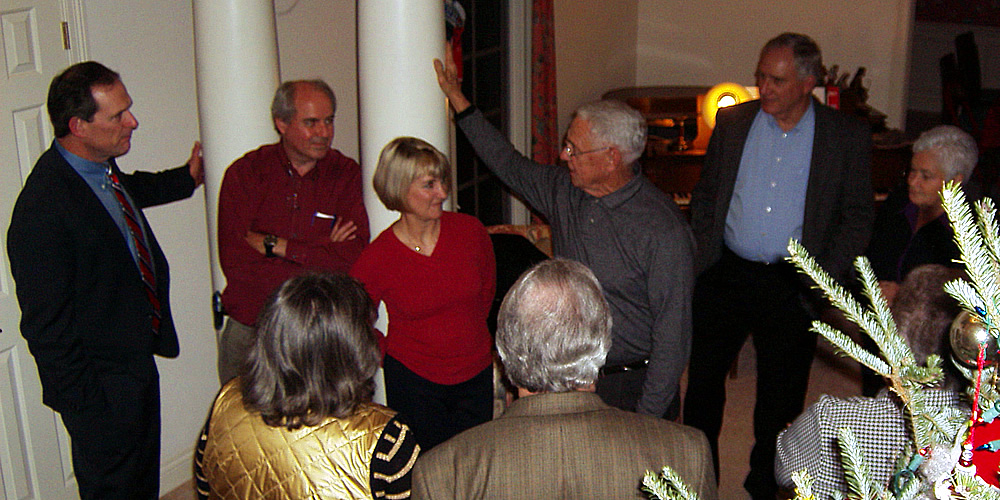
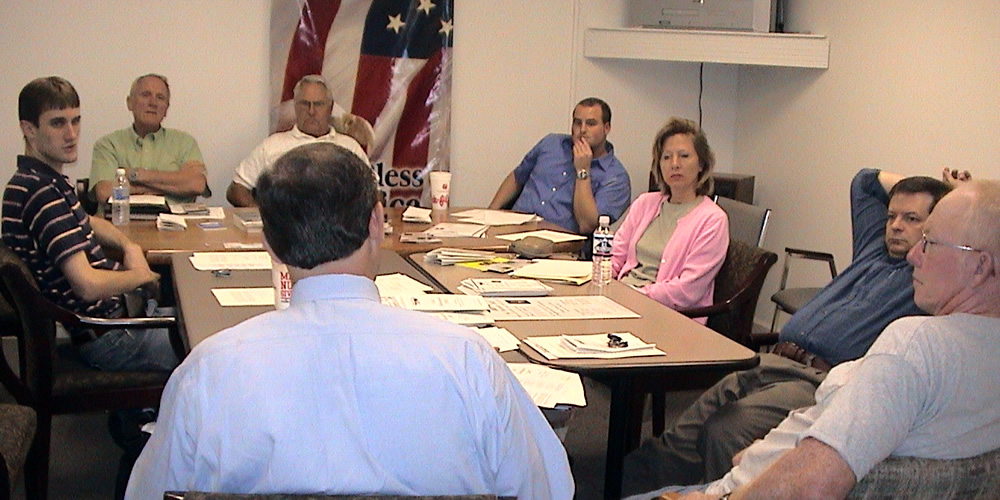
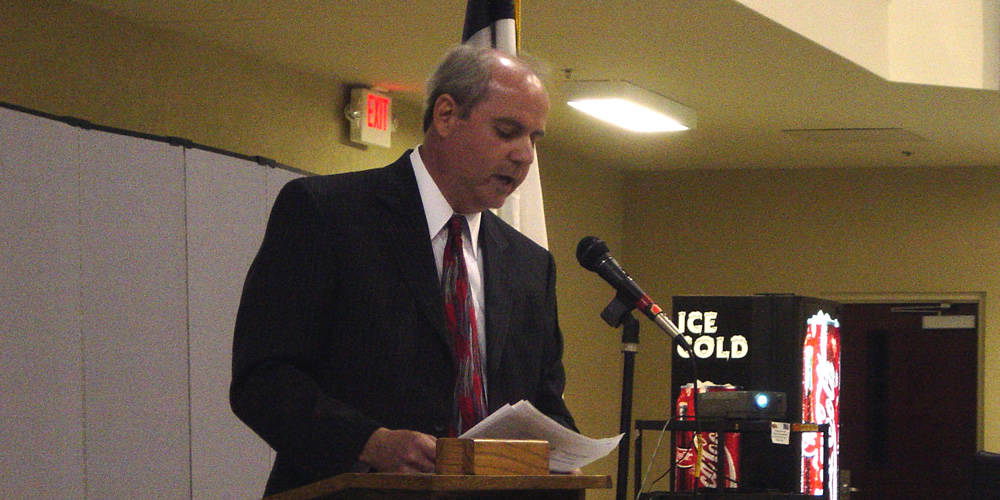
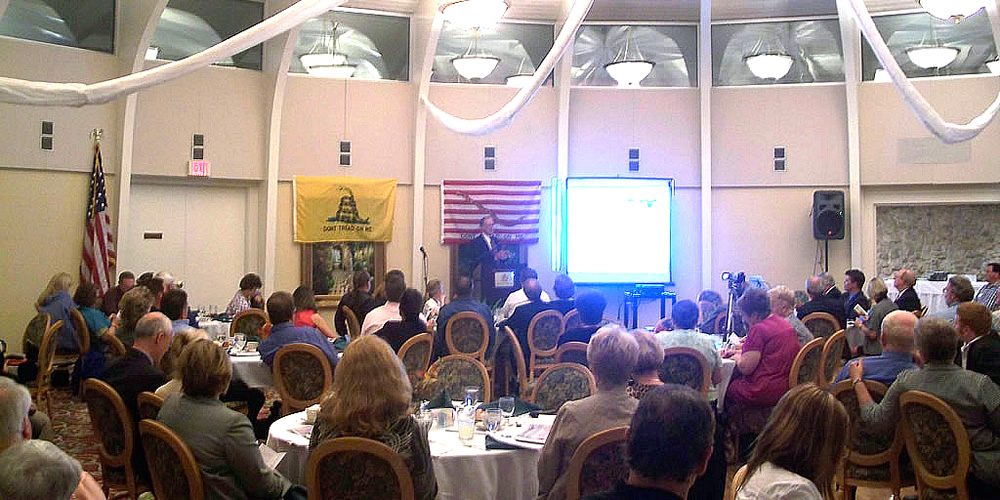
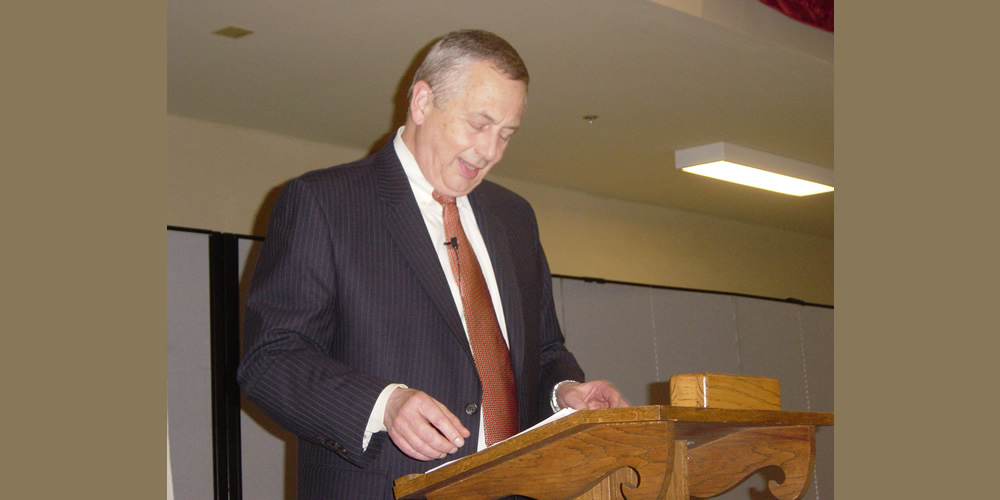
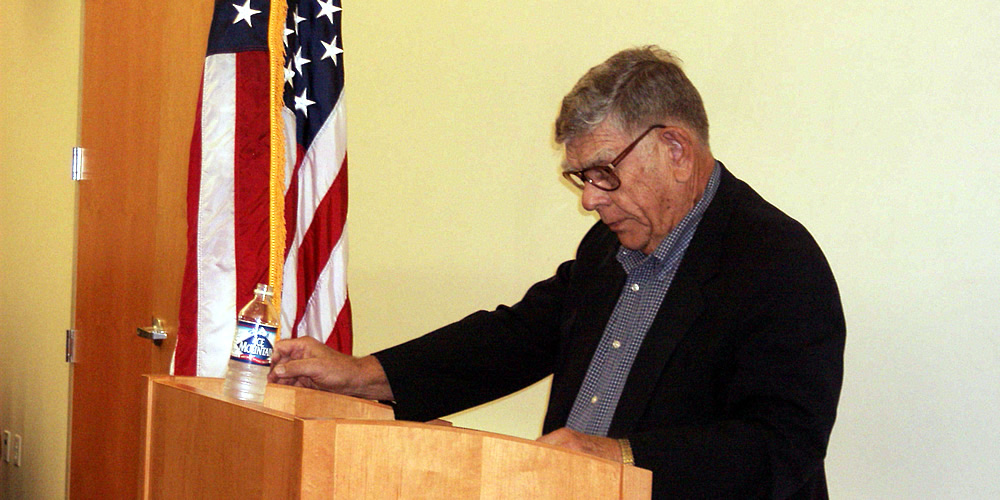
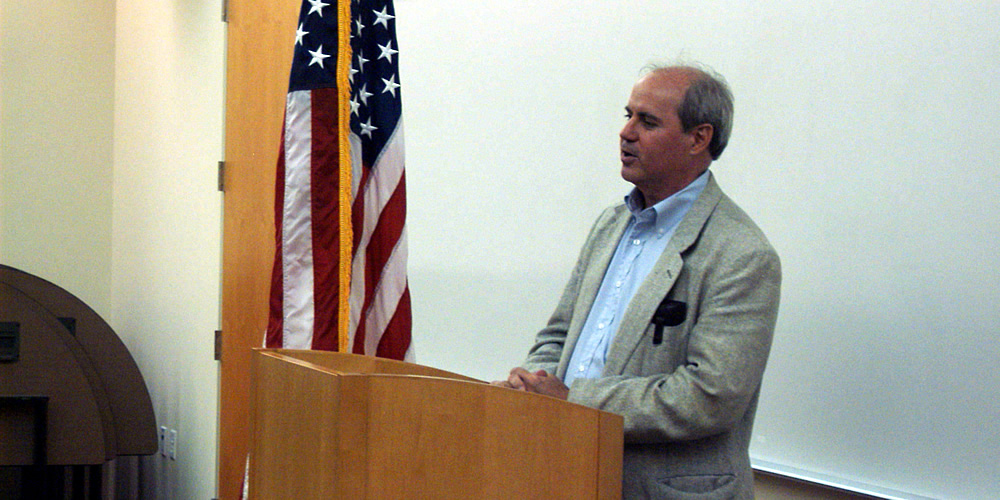
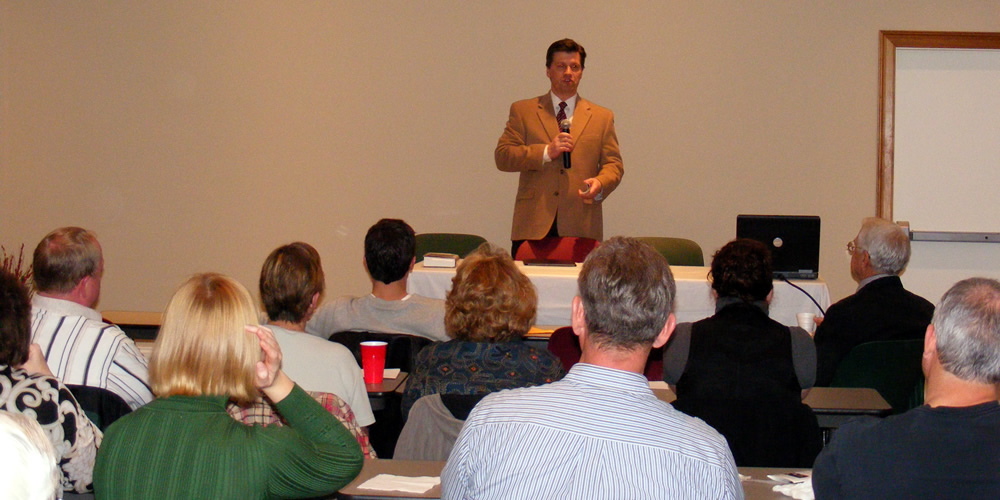
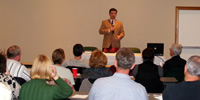
We were encouraged by Rev. Todd Linn who spoke at the March
General Meeting and mentioned that "the facts are on our
side" regarding the Christian heritage of the United States.
He mentioned a passage in Larry Burkett's "What Ever Happened
to the American Dream" book regarding William Bradford.
Bradford posted a notice based from the Bible that "If
any man would not work, he shall not eat." He mentioned
that we have to be able to truly know the Ten Commandments if
we intend to want it to be posted at courthouses. He also talked
about how we, as Christians are the salt and light of our community.
Rev. Todd Linn became pastor of First Baptist Church in July
2002. Prior to coming to Henderson he was pastor at Brookview
Baptist Church, Louisville, Kentucky and Plum Creek Baptist
Church in Vevay, Indiana.
Todd received his theological training from the Southern Baptist
Theological Seminary in Louisville, Kentucky where he received
the Master of Divinity degree in 1999 and the Doctor of Philosophy
degree in 2004. He also received a Bachelor of Arts degree from
Georgia State University in 1987. In April 2005, Todd was also
blessed to study under the "Prince of Expositors," Dr. Adrian
Rogers, completing Dr. Rogers' Pastor Training Institute in
Memphis, Tennessee.
Bill of Rights Day Celebration a Success
December 15, 2007
With
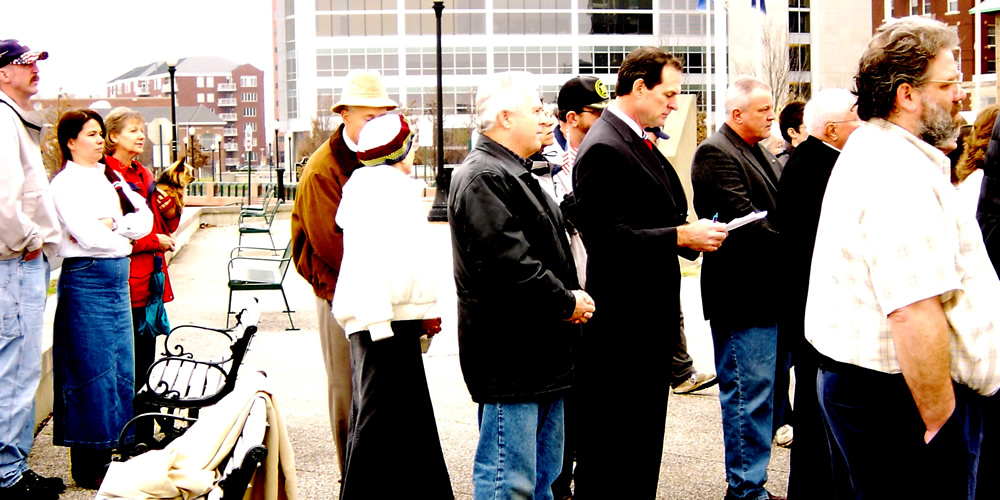
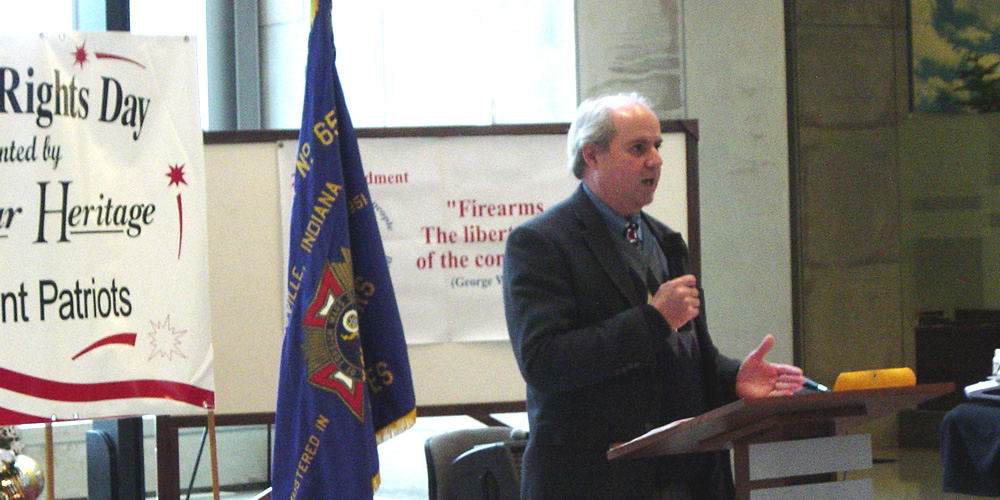
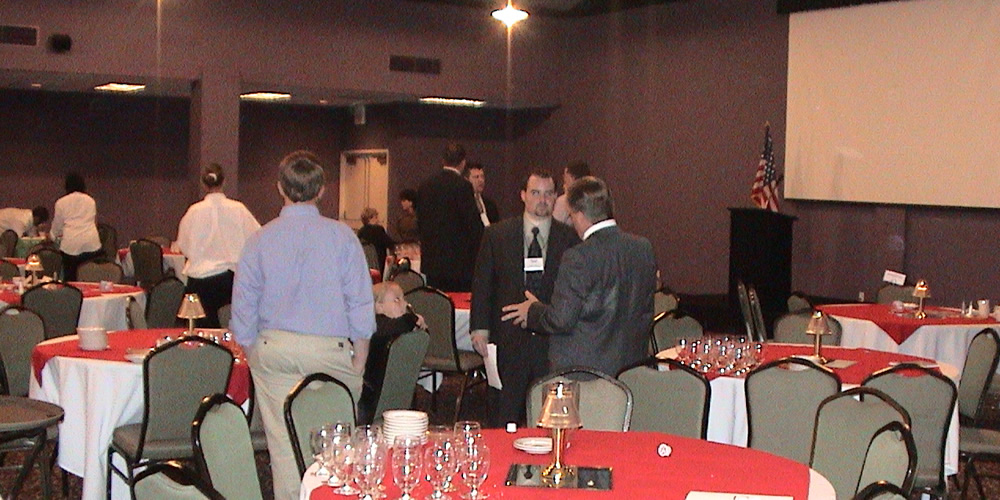
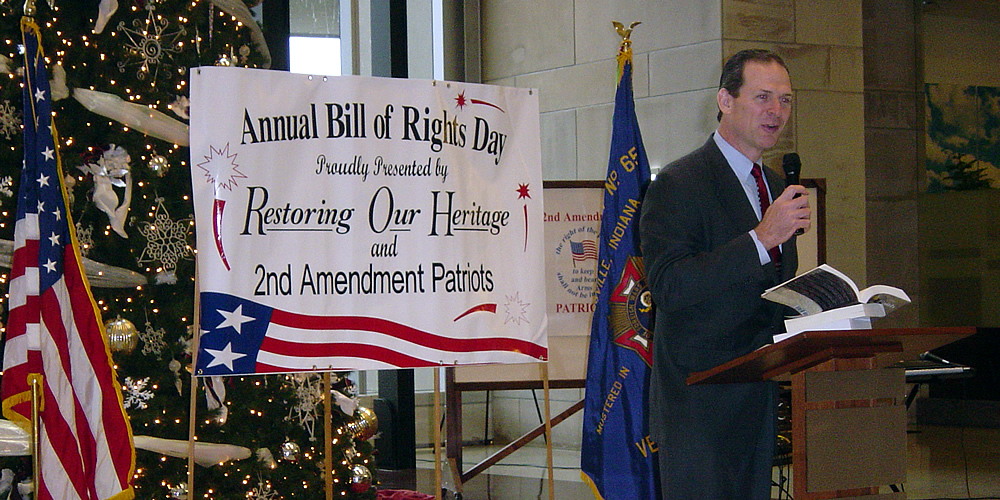
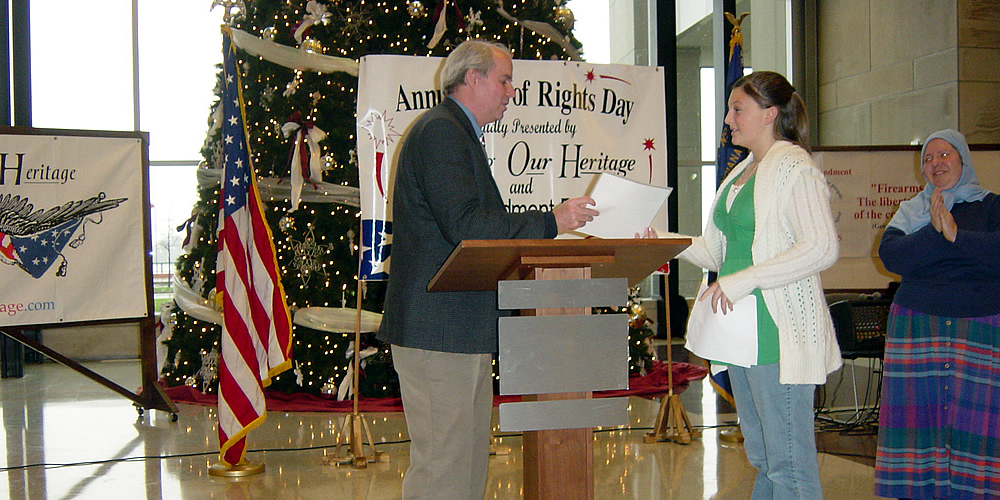
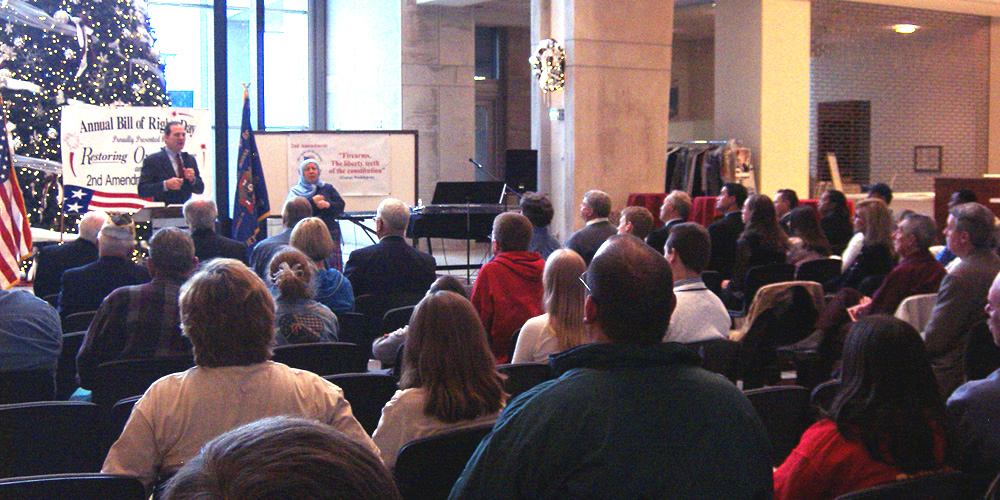
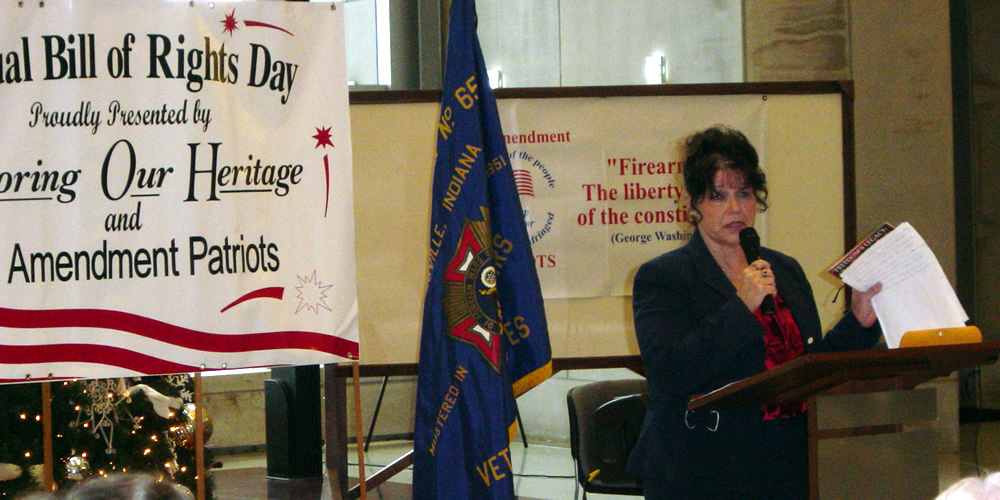
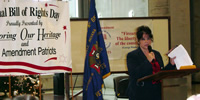
a crowd of nearly 300, the 5th Annual Bill of Rights Day Celebration,
held at the dowtown Evansville in the Old National Bank headquarters
this year, was a success. A myriad of guests and dignitaries
spoke, including author and historian Bill Federer, Indiana
State Treasurer Richard Mourdock, and Indiana 8th District U.S.
Congressman Brad Ellsworth. Bill Federer spoke on the "Bill
of Rights: America's Response to the Concentration of Power
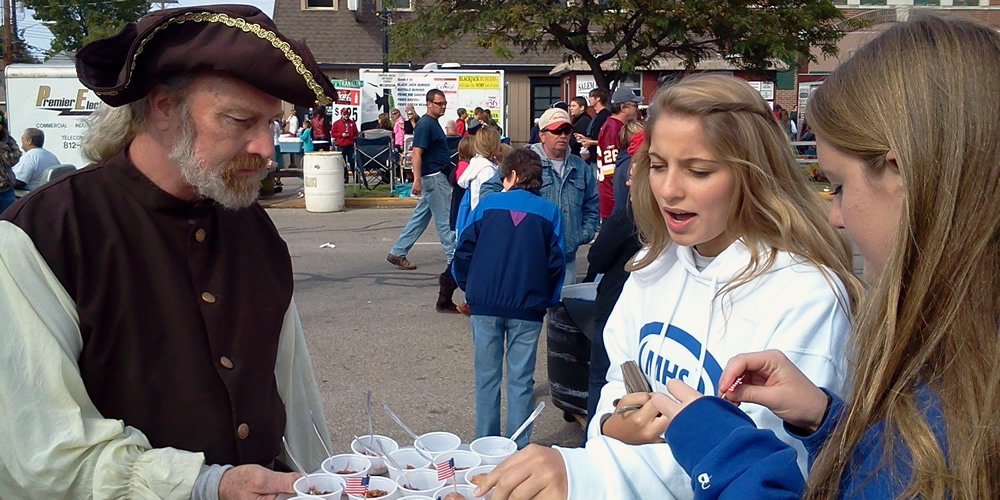
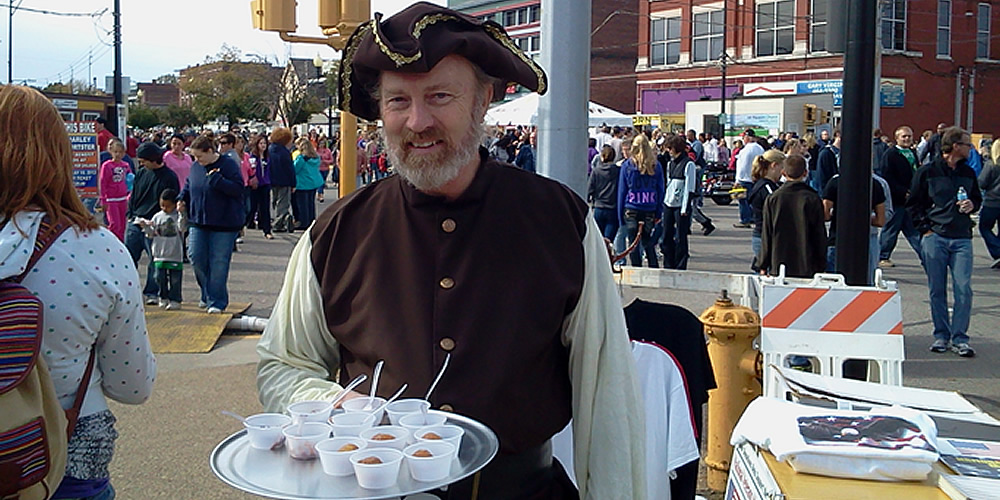
in the Reign of King George III." Tommy Smith, dressed
in attire symbolic of Uncle Sam, delivered a patriotic message.
Attendees beat back against an overcast and rainy morning to
be present at this unique celebration of our Rights as citizens
of the United States. We're thankful to all who put this event
together and for the 2nd Amendment Patriots and Jim and Margie
Tomes for their efforts, as well.
Bill Federer Explains What Every American Needs to Know About
the Qur'an
The 1400 Year History of Islamic
Expansion; The Battle of Tours, Fall of Constantinople, Barbary
Pirates and Armenian Genocide
December 13, 2007
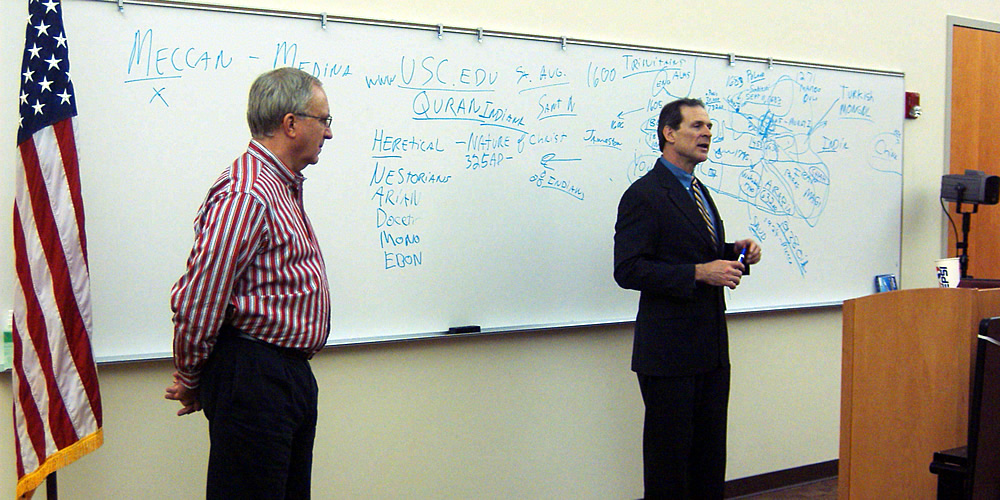
Detailing
the historical context, the heretical Christian influence, and
other facets of Islam, Muhammed, and the Qur'an, Federer described
events from the Battle of Tours to the Armenian Genocide. He
discussed the difference between Sunis and Shiites, who are
fighting still today in Iraq and other Islamic countries; the
difference arose out of one group wanting to follow the father-in-law
and the other group the son-in-law of Muhammed. He described
the destruction of the historical Library at Alexandria, Egypt,
which housed thousands of important documents, as a result of
Muslim conquest in the 7th century A.D.
There were many pagan religions in the region during Muhammed's
time. In fact, Federer mentioned that Manicheasm was the belief
system of Augustine before becoming a Christian. Federer showed
how the many pagan religions influenced Muhammed's understanding
of Christianity, including that of the Nestorians, Arians, Monothelitists,
Ebonites and other heretical sects. Even Encyclopedia Brittanica
confirms that it was through apocraphal and heretical teachings
that Muhammed learned of Christianity. In fact, one of the Christian
heretical sects of Muhammed's time, the Gnostics, had a tremendous
influence today in the popular myth behind Dan Brown's Da Vinci
Code.
Ironically, in 1492, the year of Columbus' trip to America,
Muslims were driven out of Europe, particularly from Spain.
According to Federer, the Mongols converted in mass to Islam
so they could ride into towns, plunder, kill, and take the women
with the blessing of Allah. St. Nicholas, later to become Santa
Claus of American esteem, was a direct result of Muslim conquest.
The bones of St. Nicholas were moved to Europe to avoid the
tradition of giving bones of important icons to dogs, as Islamic
invaders typically would do. The European presence of St. Nicholas
influenced the Dutch tradition and would ultimately lead to
America's tradition of giving at Christmas time.
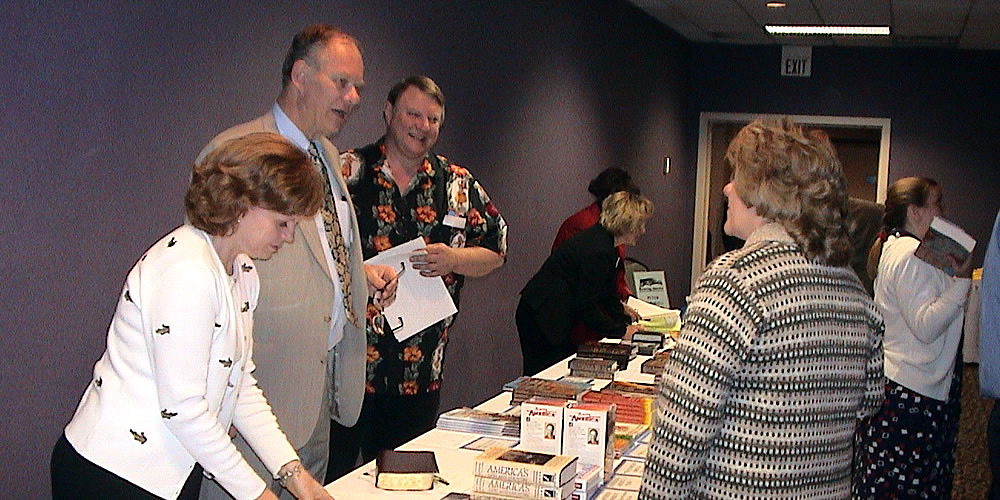
Federer has written, and features in his self-publishing
company Amerisearch,
over a dozen books, including: What Every American Needs to
Know about the Qur'an, America's God and Country - Encyclopedia
of Quotations, Backfired - A Nation Born for Religious Tolerance
No Longer Tolerates Religion, Three Secular Reasons Why America
Should be Under God, Judicial Tyranny: The New Kings in America,
The Interesting History of Income Tax, The Faith of FDR, and
more. He also features "American Minute", a free daily
email on America's Christian Heritage, among other materials.
Rees Lloyd Educates, Entertains, and
Energizes at the 2007 Restoring Our Heritage Fall Banquet
Tuesday, October 8, 2007
At the 4th Annual ROH Fall Banquet
on Monday, October 8th, 2007, former ACLU and civil rights attorney
Rees Lloyd, excited the
audience
on issues surrounding the attack on our nation's Christian heritage
and how he characterized his former employer, the ACLU, as the
"Taliban of liberal secularism in America." Born a
fellow Hoosier, the eloquent Rees Lloyd said at one point regarding
the night's theme that he hoped they would join in his enthusiasm
when saying "God and Country Forever - Surrender to the ACLU
Never!" and the crowd burst into applause.
Now the 21st District Commander of the American Legion, Lloyd
said with the legislation that John Hostettler originally authored,
PERA (Public Expression of Religion Act), they could have been
able to stem the tide of the ACLU's ability to extract taxpayer
funds when they sued counties and municipalities on anti-religious
grounds. One Republican Senator on the Judiciary Committee,
Arlen Specter, stood in the way of the legislation and Lloyd
pointed out that the vote was an astounding 244-173 in the U.S.
House.
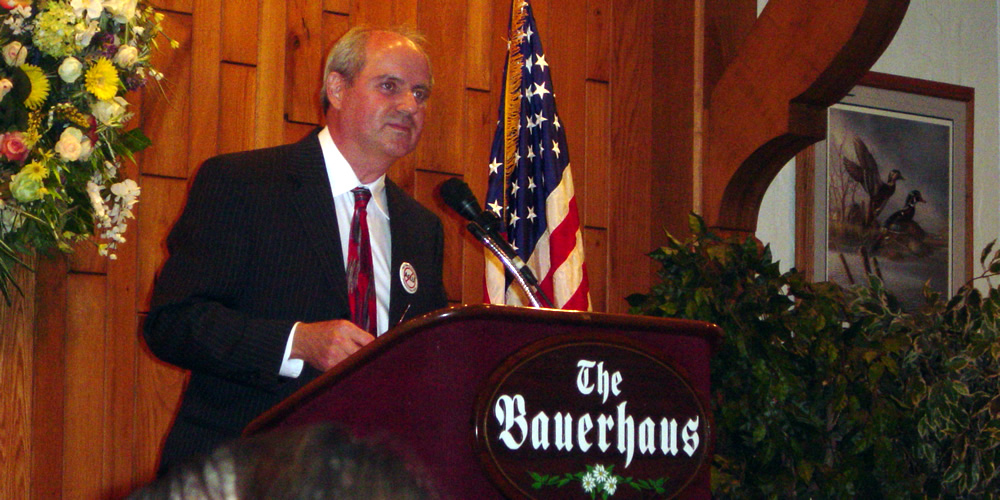
Approximately 175 people attended the event, which was held
at The Bauer Haus in Bauer's Grove in Evansville, Indiana. Lloyd
spoke extensively on the efforts of his former employer (the
ACLU) to attack faithful and law-abiding Americans and their
veterans' memorials with their own tax dollars. He also noted
a strong agreement with John Hostettler's intent to pass a restriction
on burning the American flag as a form of "free speech."
John Hostettler also spoke briefly, mentioning his appreciation
of the American Legion for standing with him on the PERA legislation.
It was his opinion that it would not have been possible without
them. He joked that a colleague in Congress noted that 1 member
of Congress plus a 2.7 million member American Legion is a majority,
in the same way we believe 1 person plus God is a majority.
We are grateful to those who contributed so much time, money,
and effort to the event.
We
Celebrate the Life of Marea Bradfield
On Wednesday, August 22, 2007 at 10:30
PM, our good friend, Marea Bradfield, and first official paid
staff member died from a 3 year battle with leukemia. She was
a crucial part of our efforts within Restoring Our Heritage
and we are reeling at this time because of how effective she
was. Many of us are tempted to call her and ask her thoughts
on all types of topics -- because of how intuitive and critical
she was -- quickly to realize we cannot.
We have set up a special page in her memory that you can visit
here.
We know she must enjoy her new home! God be with the family
at this time.
John
Hostettler Addresses Restoring Our Heritage about James Madison
on Property Rights
June 14, 2007
Former six term United States Congessman
John Hostettler from Indiana's 8th District discussed, in what
many reported as one of the more profound speeches by John Hostettler,
property rights and the importance James Madison placed therein.
The event was one of regularly scheduled bi-monthly General
Meetings of Restoring Our Heritage, open to the public, in Newburgh,
Indiana.
"Taxes come from you and from me, they come from all of
us collectively who pay taxes. Now given that over 1/3 of Americans
do not pay taxes, there is a particular set individuals who
pay taxes whose wealth is transferred in the government to other
individuals." And in his rhetorical way that many would
relate to the likes of Socrates or Marcus Aurelius of old, he
asked "Now, John, what does this have to do with taxes?"
He answered with a statement, that on the face of it seems simple
enough, but is more profound as you see where Hostettler is
going, "Property can be as much as a building, a piece
of ground, or anything that can be considered yours."
The concept was carried over to a Biblical theme of covetousness,
whereby individuals want those things of someone else. He quoted
Exodus 20:17 "Thou shalt not covet thy neighbor's house,
thou shalt not covet thy neighbor's wife, nor his man servant,
nor his maidservant, nor his ox, nor his ass, nor anything that
is your neighbor's."
Again, he continued to strengthen the connection, "Now,
if you shall not covet anything that is your neighbor's -- what
shall you covet -- what of your neighbor's can you claim or
wish to be yours?" He qualified coveting as a subset of
greed as that which deals with that which belongs to another
person. This is not necessarily wanting the Mercedes at the
dealership, he said, and while this may be another problem,
it is not covetousness. "There is this notion of property
rights and government coming in and acquiring my property --
allowing a transfer of wealth from one individual to another
individual."
He asked what we might think this has to do with the founding
of the country.
He answered, "During the ratification of the Constitution,
three men got together and sought to argue for the ratification...in
what we know today as Opinion Editorials...to allow citizens
of New York to have the opportunity to see the merits of the
Constitution as opposed to the Articles of Confederation."
They were James Madison, Alexander Hamilton, and John Jay."
James Madison is referred to as the Architect of the Constitution
-- he was not a New Yorker, he was a Virginian -- but, given
the profound status of James Madison in the country at that
time and especially in regards to the Constitution -- Jay and
Hamilton brought him in and said they would like him to sell
the Constitution to their constituents." Madison started
writing in what is known as the Federalist Papers in Federalist
#10.
Madison started the article discussing
factions and later tied this into those who might be inclined
in the majority to take away property from the minority, among
other injustices.
"By a faction, I understand a
number of citizens, whether amounting to a majority or a minority
of the whole, who are united and actuated by some common impulse
of passion, or of interest, adverse to the rights of other citizens,
or to the permanent and aggregate interests of the community."
John Hostettler continued, "If
you read the federalist papers, you'll understand why progressives,
or some people refer to them as liberals, they'll (mention)
the name of Madison, but they won't talk much about what James
Madison believed. They think that James Madison was just in
favor of the 'seperation of chuch and state'." By this,
some believe Madison's entire purpose should be to silence Christians,
but the former Congressman continued, "but if you go deeper
than just an inch, and you read the Federalist Papers, you will
be inundated with this: Madison believed the reason of man was
fallible."
Within this Federalist #10 opinion editorial, Madison directly
approached the issue of property rights by saying 'The diversity
in the faculties of men, from which the rights of property originate,
is not less an insuperable obstacle to a uniformity of interests.
The protection of these faculties is the first object of government."
Hostettler livened it up by saying, "It's like Ronald Reagan
said, 'I never got a job from a poor man' -- Madison said it
a little more eloquently, but Reagan was just on key."
Hostettler brought up how this idea by Madison that the first
object of government was to protect property rights was a slightly
different perspective than John Jay. Jay, in an earlier Federalist
Paper wrote that peace and security of its people, is the first
objective of government. But, Madison saw it as a critical component
-- the importance of private property -- and that government
should not come in and nullify a person's deed for some other
interest because the legitamite land owner bought it first.
Hostettler continued to quote Madison in Federalist #10:
"So strong is this propensity
of mankind to fall into mutual animosities, that where no substantial
occasion presents itself, the most frivolous and fanciful distinctions
have been sufficient to kindle their unfriendly passions and
excite their most violent conflicts. But the most common and
durable source of factions has been the various and unequal
distribution of property.
From the protection of different and unequal faculties of acquiring
property, the possession of different degrees and kinds of property
immediately results; and from the influence of these on the
sentiments and views of the respective proprietors, ensues a
division of the society into different interests and parties.
Hence
it is that such democracies have ever been spectacles of turbulence
and contention; have ever been found incompatible with personal
security or the rights of property. "
According to Madison, government should
protect the property rights of its citizens. Government should
not be involved in allowing factions to control that or lead
to this wicked project of equal distribution of property.
Hostettler noted explicitly that
James Madison believed that the equal division of property was
a wicked and improper project.
The direct phrase from Madison in Federalist #10 is below:
"A rage for paper money,
for an abolition of debts, for an equal division of property,
or for any other improper or wicked project, will be less
apt to pervade the whole body of the Union than a particular
member of it; in the same proportion as such a malady is more
likely to taint a particular county or district, than an entire
State." (emphasis added)
Hostettler connected property with
what happens in the federal government. He asked rhetorically
why we spend more than we take in. For example, prescription
drugs are never paid for with current revenues. Similarly, we
do the same with the war in Iraq. There is no one projecting
an end in sight to this kind of spending, he said definitively.
"So where does this bring us today?" Hostettler asked.
The former congressman noticed that an opinion editorial with
the title "A Pious Nation" appeared in the USA Today
by someone who specializes in religion and public life
and also serves as a USA Today board member.
The case is made in this article that America would truly be
a more pious nation if we expanded transfer payments by the
United States from those who have to those who have not.
Tying the discussion of property rights by Madison and the aspect
of covetousness therein, Hostettler shows how this opinion editorial
intends to incite Christians to do more by way of transfer payments
within the federal government. Jokingly, Hostettler says that
he also does not refer frequently in his article to James Madison.
Hostettler distinctly relates this appeal to the "wicked
project" that Madison stated in Federalist #10. According
to the Apostle Paul in 1 Corinthians 13:3, it profits you nothing
as a Christian to give all you have to the poor and have not
charity or love.
Hostettler made the statement, originating from Matthew 6:24,
that:
"No one can serve two masters.
Either he will hate the one and love the other, or he will be
devoted to the one and despise the other. You cannot serve both
God and Money"
He also recited Matthew 6:30-33:
"If that is how God clothes the
grass of the field, which is here today and tomorrow is thrown
into the fire, will he not much more clothe you, O you of little
faith? So do not worry, saying, 'What shall we eat?' or 'What
shall we drink?' or 'What shall we wear?' For the pagans run
after all these things, and your heavenly Father knows that
you need them. But seek first his kingdom and his righteousness,
and all these things will be given to you as well."
"If you look now
at the debates in Congress, there is this notion of compassionate
conservatism. If you give through various faith entities, and
those faith entities like alcoholism reduction programs, drug
addiction programs ... suggest that Christ has anything to do
with their ultimate healing, you will have your funds taken
away. You can do everything with that money except where you
learned the lessons that allowed you to help in that way."
He qualified that these are not just his thoughts -- they are
shared by James Madison. When Madison said it was wicked to
take property from others, he knew who he was talking to. He
talked in a language they would understand.
Hostettler neared the end of his talk, stating eloquently:
"So
as we see today, what we consider to be an erosion of our property
rights, all we have to do is go back to the beginning, go back
to the founding, go back to the genesis and learn from those
individuals who helped to create this republic -- that gave
us this form of government -- and learn from them what was meant
by 'property rights' and what government was to do to protect
those rights and what government was not supposed to do in order
to protect those rights." (emphasis added)
Congressman Hostettler was generous
enough to take questions about property rights and any other
topics after the talk for nearly an hour. Many mentioned the
privelege it was to attend and to hear the profound nature of
the former Congressman's discussion of issues important to him
and an overwhelming majority of Americans. He helped to fulfill
the objective of Restoring Our Heritage -- to educate people
about these issues. We thank him for his enlightening, highly
informed lecture and for his service within the United States
Congress that the Founding Fathers very likely would have said
furthered their cause and met their mutual standards.
Principal Jon Abbey talks about the
separation of church and state applied to schools
April 12, 2007
Jon
Abbey, the Principal of Princeton Community High School in Gibson
County, Indiana, was the featured speaker for the Restoring
Our Heritage General Meeting. Formerly in sales, Abbey was willing
to leave a "great career" to pursue one that had always
been his passion -- education.
Abbey discussed that court cases along with the Constitution
reveal that you can pray in school, for one. Qualifying his
speech, he said he speaks as an individual and not as a principal,
but he said that the "original idea for no federally mandated
church system has gone so far beyond the Founder's intent that
we likely have harmed the country as a result." The court
system has legislated many issues that have not been theirs
to legislate. "The Supreme Court found that you couldn't
pray in the stands at football games, but that's probably pushing
beyond the Establishment Clause," he added.
One of the important elements that Abbey covered regarding his
fellow educators was that "you have to have the courage
to defend the Constitution." By not standing to defend
it, he inferred ave encouraged many of our problems. He then
talked about legal issues with schools and how the ACLU has
been able to make much ground in education; he said "if
you really want to know why school boards operate the way they
do on this issue is because they are scared -- It's costly even
if you are right." He finished his presentation by saying
"if we don't support the Constitution, as educators, who
will?" He referenced Thomas Jefferson as one of his favorite
founders, and quoted him saying "educate and inform the
whole mass of the people...they are the only sure reliance for
the preservation of our liberty."
The
U.S. Congress and President of the United States Celebrate the
15th "Religious Freedom Day" (Which Happens to be
Date of the Formation of Restoring Our Heritage)
January 16, 2007
In an incredible twist of fate, it turns
out that the date originally designated as "Religious Freedom
Day", January 16, 1993, would turn out to be the very day
of the year, January 16th, that Restoring Our Heritage would
form eight years later -- and the random and unintentional nature
of ROH making it that day is what is so astonishing.
Religious Freedom Day was originally designated for January
16, 1993 by act of Congress and through declaration by President
George H. W. Bush in honor of the 1786 Virginia Statute for
Religious Freedom. This Statute was authored by Thomas Jefferson
and ultimately passed on January 16, 1786 and would eventually
influence the Bill of Rights adopted into the U.S. Constitution.
It is only fitting and proper, considering the remarks of our
three presidents over the past 15 years of Religious Freedom
Day proclamations, that the work of Restoring Our Heritage to
Educate Americans of their Christian Heritage continues.
To
see this year's Religious Freedom Day proclamation by President
George W. Bush, click here (found on the whitehouse.gov website)
For information on the annual celebration and declaration of
Religious Freedom Day, visit religiousfreedomday.com
Dennis Newberry speaks about
George Washington at the August ROH General Meeting
August 10, 2006
Dennis discussed the "Father of
our Nation," George Washington, at the August General Meeting.
He mentioned the admiration of his troops and even arch enemy
King George of England commented that he was of "great
character." Washington, even though he was very wealthy
in his early twenties, still contributed heavily and even slept
in tents.
Michael Deering speaks at ROH General
Meeting
June 8, 2006
Michael spoke of our problems, from illegal
immigrants (which he explained as a Mexican insurgency) to our
inability as Christians to stand up for what is right. When
the country was first founded, Christianity was the focus. "Frankly
we are in a do or die situation" in reference to the point
at which the Roman empire reached, which he drew comparison
to for current day America.
"True
freedom comes from Jesus Christ, which is what the Founding
Fathers knew well," Michael mentioned. Recommending
that we fulfill the Great Commission in our everyday activities,
he ended the presentation a Thomas Jefferson quote: "Can
the liberties of a nation be secure when we have removed their
only firm foundation -- that they are a gift from God?"

Lately, America has been on a course
that is not admirable, let alone been pleasing to God. Abortion
on demand, condom distribution in schools, removing signs of
faith from all of our institutions, are just a few of the signs
that our society is experiencing a severe moral and spritual
breakdown. George Mason, essentially the author of the Bill
of Rights, warned us that “by an inevitable chain of causes
and effects, Providence punishes national sins, by national
calamities.” Jesus told us that we are to "occupy"
until he returns. As a result, it is our responsibility -- as
Christians and as Americans -- to take action.
One of the best things we can do is to educate people of the
truth during these trying times. Restoring Our Heritage was
formed to do just that -- to educate Americans of their Christian
Heritage, something that has not been in textbooks for more
than a half century. The truth is that the United States was
founded solidly upon principles originating from the Bible.
The vast majority of the Founding Fathers were Christians. They
spoke much regarding the way that Christianity was the backbone
of American society. One good example is how our three branches
of government were derived, which our Founding Fathers modeled
from Isaiah 33:22 "For the Lord is our judge, the Lord
is our lawgiver, the Lord is our king; it is he who will save
us."
Only when we understand our past,
will we know what we must do in the present,
so that we, the American people, will have a bright future.
It is only then, that we can again be a beacon of hope and truth
to the other nations and their peoples.
________________
We hope that you will join with us in this opportunity to educate
Americans about our true Christian Heritage.
Be sure to see our quotes page
for more about what George Washington, John Adams, Thomas Jefferson,
James Madison, Samuel Adams, Benjamin Franklin, John Quincy
Adams, Patrick Henry, and many more had to say about our nation
and us as a people.
For more resources on these and related topics, visit
the resources page. We have included
books from authors such as David Barton, Rev. Peter Marshall,
Bill Federer, Tim LaHaye, and Rabbi Daniel Lapin.
We offer membership for those who would want to join
the ROH team. Go to our membership
page to learn more about the cost and benefits of joining.
Restoring Our Heritage has many goals for the future
to help spread the truth, but funding is what makes those measures
possible, as well it is essential for a not-for-profit [501
(c) 3] tax-deductible organization to survive. We hope that
you will consider visiting the donations
page to help us get closer to those goals.